Home / Mitered Countertop Edges
How a Mitered Edge Makes a Countertop Look Thicker
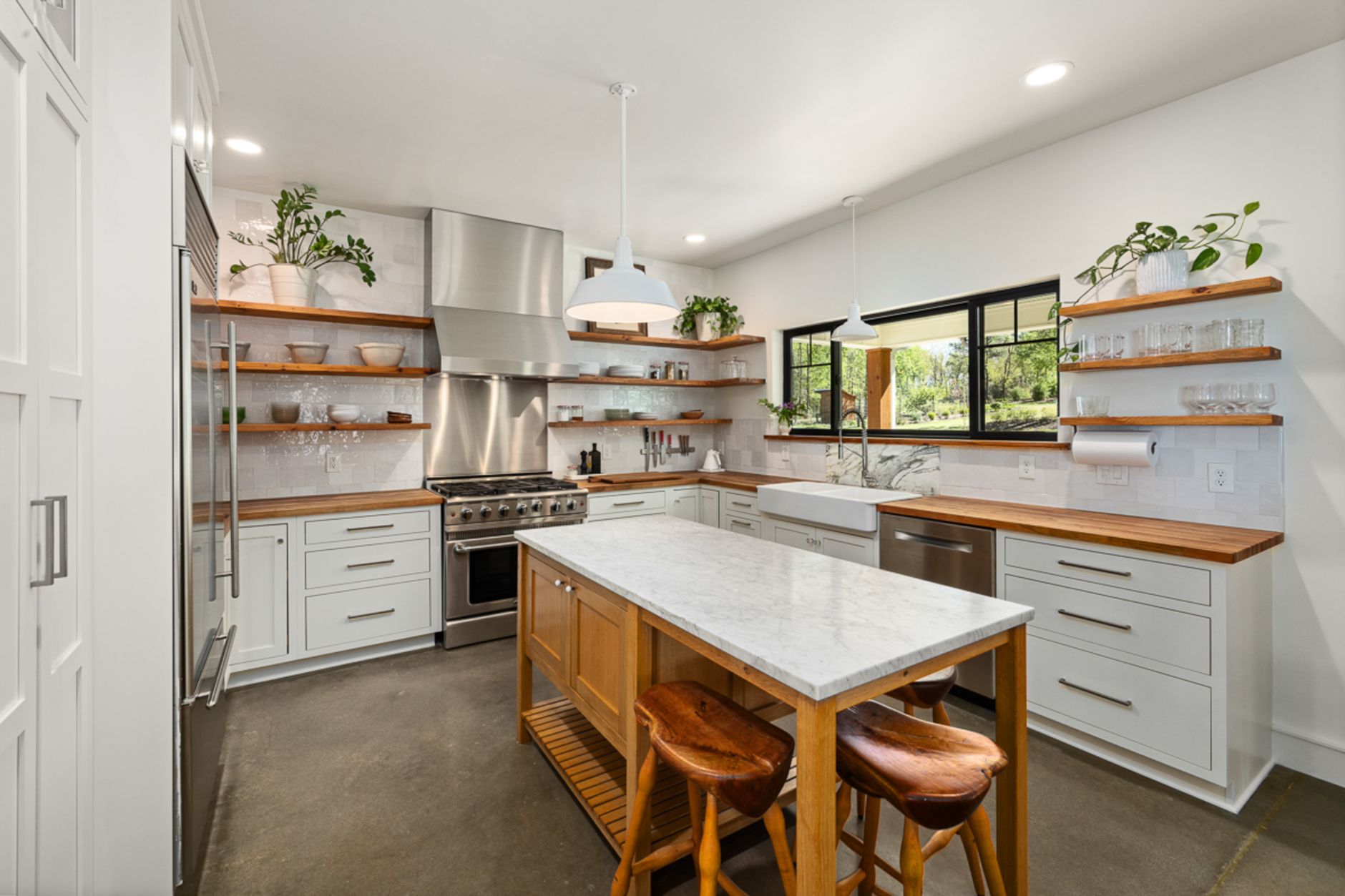
The Illusion of Mass Through Mitered Edge Construction
When designing a kitchen or bathroom, the visual weight of the surfaces plays a significant role in the overall aesthetic. Many homeowners desire the appearance of a massive, monolithic slab of stone that looks several inches thick. However, standard slabs of natural stone or engineered materials often come in thicknesses that might feel too slender for a bold, modern design. This is where mitered edge construction becomes a valuable technique. Instead of using a single thick piece of stone, fabricators use two or more pieces of material joined at a precise angle to create the appearance of a much thicker profile.
The fundamental process involves cutting the edge of the countertop slab and the edge of the vertical apron at a forty five degree angle. When these two pieces are brought together and bonded, the joint forms a ninety degree corner. This construction method allows a standard slab to mimic the look of a heavy block of stone without the extreme weight or the logistical difficulty of sourcing exceptionally thick raw materials. By manipulating the vertical drop of the edge, a designer can choose how much thickness to project, whether it is a subtle two inch look or a dramatic four inch slab appearance.
Achieving Seamless Beauty with Pattern Continuity
The success of a mitered edge depends heavily on how well the pattern flows from the horizontal surface down to the vertical face. This is particularly important when working with materials that feature heavy veining or large scale movements. If the pattern is interrupted abruptly at the corner, the illusion of a single thick piece is lost, and the eye will immediately detect the seam. High quality fabrication focuses on pattern matching, where the veins of the stone are aligned so they appear to wrap around the corner continuously.
In many cases, the pattern is not just a natural movement within the stone but is also a printed element on the surface of certain manufactured materials. For these products, the continuity of the design is vital to maintaining a high end look. When the veins flow seamlessly from the top of the counter down the mitered edge, the eye perceives the entire structure as one solid object. This level of detail transforms a piece of joinery into a piece of sculptural art, making the countertop a focal point of the room rather than just a functional surface.
Mitered Edges and the Waterfall Effect
One of the most dramatic applications of the mitered edge technique is the creation of waterfall ends. A waterfall edge occurs when the countertop material continues past the edge of the cabinetry and travels vertically all the way down to the floor. This creates a continuous loop of stone that wraps around the side of an island or a peninsula, providing a sleek and architectural finish.
The mitered joint is the engine behind the waterfall look. By joining the horizontal slab to a vertical piece at a mitered corner, the transition looks sharp and clean. This style is especially popular in contemporary homes found in neighborhoods like Canyon Crest or Mission Grove, where modern architecture often calls for clean lines and minimal visual clutter. The waterfall design can make a kitchen island feel like a heavy, permanent piece of furniture, grounding the space and adding a sense of luxury through its sheer presence.
Because the vertical piece of the waterfall must be a separate piece of material, the choice of slab becomes even more critical. Any mismatch in color or pattern between the top and the side will be highly visible. Achieving a perfect waterfall requires precise planning to ensure that the most attractive part of the slab's pattern is positioned exactly where the corner meets, allowing the visual flow to descend uninterrupted toward the floor.
Application with Thin Porcelain and Sintered Stone
The rise of porcelain and sintered stone has changed how designers approach countertop thickness. These materials are fired at extremely high temperatures, making them incredibly resistant to heat, stains, and UV fading. One of their most defining characteristics is that they are manufactured in much thinner slabs than traditional granite or quartz. While this makes them lightweight and versatile, a very thin porcelain slab might look delicate or underwhelming on its own in a high end kitchen.
Mitered edges solve this aesthetic problem perfectly. By using a mitered apron, a thin porcelain slab can be made to look like a thick, heavy slab of stone. This allows homeowners to enjoy the benefits of porcelain, such as its ability to withstand the strong sunlight often found in Riverside during the long, hot summers, while still achieving a substantial and luxurious look. The mitered edge provides the visual mass that thin porcelain naturally lacks.
However, there are technical considerations when using mitered edges with these materials. Because porcelain and sintered stone are thin, they can be more prone to chipping at the edges and corners. The mitered joint must be executed with extreme precision to ensure the edges are structurally sound. When the vertical apron is attached, it must be perfectly aligned to prevent any stress on the delicate edges of the porcelain, which could lead to breakage during or after installation.
Enhancing the Look of Engineered Quartz
Engineered quartz is another material where mitered edges can significantly alter the visual impact. Since quartz is composed of crushed quartz bound with polymer resin, it can be manufactured in a wide variety of colors and patterns, ranging from solid tones to designs that mimic natural marble. A mitered edge allows a quartz countertop to achieve a thick, custom look that can match the scale of the surrounding cabinetry.
While quartz is nonporous and does not require sealing, it is important to remember that the resin component makes it sensitive to extreme heat and long term UV exposure. In areas where the countertop might be subject to direct sunlight, a mitered edge can help create a more substantial appearance that feels intentional and designed. Because quartz does not have the natural irregularities of stone, the mitered joint can often look exceptionally clean, almost as if the material was cast in a single thick mold.
The thickness provided by a mitered edge also offers a sense of stability to the visual design. In a kitchen with large, heavy cabinets, a thin quartz edge might look disproportionate. By adding a mitered apron, the countertop gains the visual weight necessary to balance the room. This technique allows for a high degree of customization, as the thickness of the edge can be adjusted to suit the specific proportions of the kitchen layout.
Maintenance and Care at the Mitered Joint
While a mitered edge provides incredible visual benefits, it does introduce a seam that requires attention. Even though the joint is designed to be nearly invisible, it is still a point where two surfaces meet. For natural stones like granite or quartzite, which may require periodic sealing, the care of the joint is a consideration. While a sealer helps resist oil and liquid stains on the surface, the mitered joint itself is a structural connection that must remain clean and free of debris.
In regions like the Inland Empire, where the water can be hard and contain high levels of calcium and magnesium, mineral deposits can sometimes accumulate near seams or edges. It is important to clean the mitered joint regularly with mild soap and water to prevent mineral buildup from dulling the appearance of the corner. For marble, which is susceptible to etching from acidic substances, extra care should be taken around the mitered edge to ensure that any spills do not sit in the joint and cause discoloration or damage to the stone.
For engineered quartz and porcelain, the primary concern at the joint is ensuring that the adhesive used during fabrication remains intact. While these materials are highly durable, the joint is the most vulnerable part of a mitered edge. Avoiding heavy impacts directly on the corner and being mindful of extreme temperature shifts will help preserve the integrity of the seam. When the mitered edge is properly maintained, it remains a seamless, beautiful element that contributes to the longevity and elegance of the kitchen or bath for many years.