Home / A Year in the Life of a Counter Edge: Seasonal Checks for Every Profile
A Year in the Life of a Counter Edge: Seasonal Checks for Every Profile
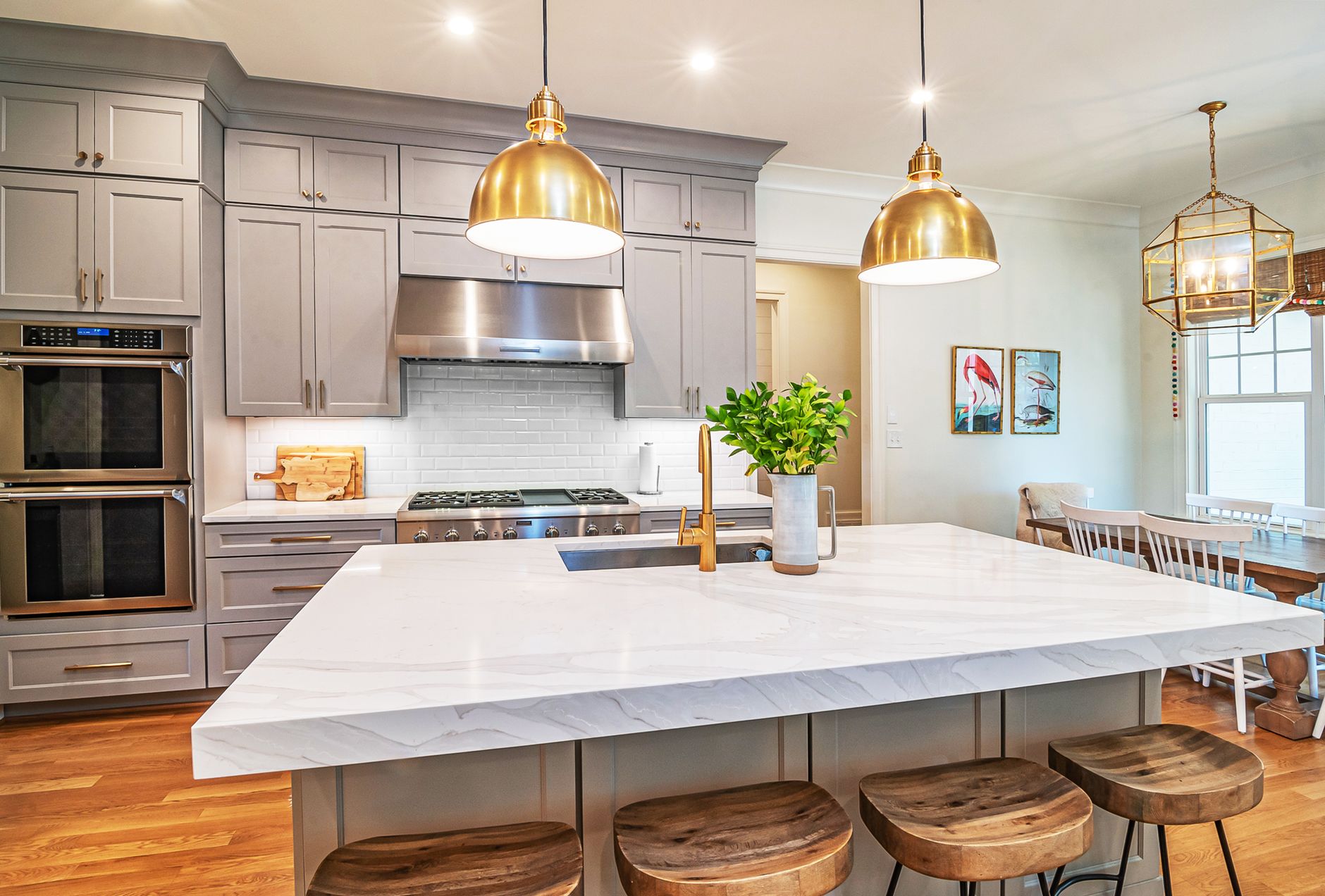
Low afternoon sun slanting across a kitchen island shows an edge more honestly than any showroom lamp ever will. Every hairline, dull patch and worn corner stands out in that light, and it is a reminder that an edge is not a fixed object. It lives through four different kitchens in one year: the hot one, the windy one, the damp one and the crowded one.
Most advice about counter edges stops at installation day. Pick a shape, approve the template, move on. But heat moves the material, dry air pulls moisture out of sealers, steam creeps in along seams, and a house full of holiday guests leans on the overhang in ways a normal Tuesday never does. If the shape names below are unfamiliar, a closer look at edge profile earlier on this site describes each one and how it feels in the hand. Time is the dimension that advice usually leaves out.
Why the edge feels the weather first
The edge is the most exposed part of a countertop. It has the most surface per inch of material, it takes every bump, and its finish is thinnest because it was cut and polished by hand. Whatever the weather does to a counter, it does first and fastest here.
Three forces do most of the work through the year:
- Temperature swings, which make the slab and its adhesive move by tiny amounts, most noticeably at seams and corners.
- Moisture, which arrives as steam in cold months and as humidity near the sink, and leaves in dry heat.
- Use pattern, which shifts from quick weekday meals to long gatherings with people perched and leaning at the front of the counter.
In Riverside the first of these is dramatic. Inland Southern California has long hot summers, dry air and the occasional Santa Ana wind that strips moisture from everything it touches. Older neighborhoods such as the Wood Streets, with original windows and leaky walls, feel those swings more than a newer home with modern glazing.
What each profile asks for
A quick reference, assuming a sealed natural stone or an engineered surface:
- Eased edge: forgiving in every season. Check the top corner for hairline chips after busy periods, and little else.
- Beveled edge: the flat angle catches drips, so hard-water film shows sooner. Wipe it dry in humid months.
- Half and full bullnose: the curve sheds water well, but the lower lip of a full bullnose collects condensation, dust and grease.
- Ogee: the grooves hold moisture, grime and sealer residue. It needs the most attention in damp seasons and heavy cooking periods.
- Mitered or built-up edge: the joint is the point to watch, because temperature swings stress the seam line.
- Waterfall: the vertical leg can take direct sun and shows fingerprints in dry weather. Check where the slab meets the leg.
Summer: heat, sun and long evenings
Heat is the headline of the season, and it touches edges in three ways.
Expansion at the seams
Stone and engineered surfaces expand a little in heat and contract as the house cools overnight. The cabinet base and adhesive absorb most of it, but the movement concentrates at joints. A mitered edge or a waterfall corner is two pieces meeting at an angle, so its glue line carries the most stress. A hairline gap that was absent in spring is worth photographing, because a second photo later shows whether the movement is seasonal or progressive.
Sun through the window
A west-facing window can bake one section of counter for hours every afternoon. A hot edge is uncomfortable to lean on and hard on any sealer, and some resin fillers and solid surface materials can yellow slightly under repeated strong sun. If one end of the island always sits in a bright patch, rotate appliances and boards away from it and consider a light shade at peak hours.
Crowds and cold drinks
Warm evenings bring people to the kitchen. They lean on the front edge, sit at the overhang and set down heavy pitchers beside the corner. Sharp profiles chip under that treatment, and soft ones survive it. Wipe condensation rings from the edge promptly, since a cold glass can darken porous stone if its ring is left to sit.
Early fall: wind, dust and dryness
The Santa Ana winds often arrive just as the weather finally cools. They are dry and full of fine dust that works through window gaps and settles on every horizontal surface.
Dust on a flat counter wipes away. Dust in an ogee groove or on the lip of a full bullnose turns into gritty paste under a damp cloth. Use a dry soft brush first, then a damp cloth, so no abrasive grit is dragged across the finish.
Dry air also pulls moisture out of sealers. This is a good moment for a water-drop test: put a few drops on the edge and watch. Drops that bead and sit mean the sealer is working. Drops that spread and darken the stone within a few minutes mean it is overdue for a fresh coat. Test the edge separately from the face, since a cut surface can absorb differently from the polished top.
Winter: steam, grease and the cooking load
Cold months mean the oven runs more, pots simmer for hours and windows stay shut. Steam and cooking oil have nowhere to go, and both settle at the front of the counter, where hands and cloth meet.
- Wipe the front edge with a mild soap solution after long simmering or frying. Grease left in a groove turns sticky and holds dust.
- Watch the sink area. Water running down the front edge can wick into porous stone or soak the substrate under a seam.
- Keep hot pans off the corner. A pot pulled straight from the burner puts thermal shock where the material is thinnest.
The ogee and other decorated profiles earn their keep or lose it in this season. A plain eased edge wipes in one pass, while a carved one needs a brush. Check cleaner labels too, because acidic sprays can etch marble and limestone, and the dull mark shows most on a polished edge.
Holiday weeks: the heaviest use of the year
Holidays pack a year of wear into a few days: extra cooks, children on stools and platters stacked at the front of the island. Before the rush, press down near the far end of the overhang and confirm nothing flexes, and that brackets or corbels have not loosened. A long overhang with a heavy decorative edge is the most vulnerable arrangement. After the rush, look again for new chips and rings.
A worked example: one kitchen, four visits
Picture a 1930s home in the Wood Streets with a stone island, a beveled front edge and a west window.
- Spring: a fingernail run along the edge feels smooth and water drops bead. Nothing to do.
- Late summer: a hairline shadow appears where the top meets a return. The owner photographs it beside a ruler.
- Fall: after a windy week, grit is packed along the bevel. A dry brush clears it, and the water test shows the sealer thinning on the sunny end, so a reseal is booked.
- Winter: grease has built up near the range and a soap wipe clears it. The late summer photo is compared, the gap has not changed, and it was seasonal movement.
None of those visits took more than a few minutes, yet together they caught a sealer problem before it became a stain and a seam question before it became a repair.
A short seasonal checklist
Tape this inside a cabinet door and run through it at each change of season:
- Run a fingertip along the whole edge for chips, rough spots or sharp corners.
- Look along every seam and mitered joint for a gap or color shift, and photograph it.
- Do a water-drop test on the edge and the face.
- Press the far end of the overhang to confirm there is no flex.
- Brush grooves and lips, then wipe with a damp cloth.
- Check beneath the front edge near the sink for stains or dampness.
When to call the fabricator
Most seasonal changes are cosmetic and fixable at home. A gap that keeps widening, a crack across the edge, a chip that exposes raw material or an overhang that flexes under hand pressure deserves a professional look, and the sooner it is seen the simpler the repair tends to be.
For broader background on materials, surface care and kitchen planning, the riverside custom countertops hub gathers those topics in one place, and it pairs well with the checklist above. The edge is the part of a countertop that tells you first when something is changing, and a few minutes at each turn of the year is usually enough to hear it.